Omega-3 DHA
C₂₂H₃₂O₂
Also known as: Docosahexaenoic acid, DHA, 22:6(n-3), Cervonic acid
Disclaimer: This information is for educational purposes only and is not intended as medical advice. Consult a healthcare professional before starting any supplement regimen.
Molecular Profile
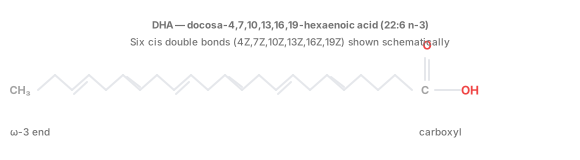
C₂₂H₃₂O₂
328.49 g/mol
(4Z,7Z,10Z,13Z,16Z,19Z)-Docosa-4,7,10,13,16,19-hexaenoic acid
6217-54-5
Overview
Docosahexaenoic acid (DHA, 22:6 n-3) is a 22-carbon polyunsaturated fatty acid with six cis double bonds — the longest and most unsaturated of the common omega-3s. Humans can synthesize DHA from its shorter-chain precursor α-linolenic acid (ALA) only inefficiently (typically <5% conversion), which makes dietary intake the practical primary source. DHA is concentrated in the phospholipids of neuronal membranes (particularly phosphatidylethanolamine and phosphatidylserine at synapses) and photoreceptor outer segments, where its flexibility supports membrane fluidity, receptor function, and synaptic transmission. DHA is also the precursor to specialized pro-resolving mediators — including resolvins and neuroprotectins — that actively resolve neuroinflammation. Supplemental forms include fish oil (triglyceride or ethyl ester), krill oil (phospholipid-bound), and algal DHA (a vegan, contaminant-free option manufactured from marine microalgae).
Mechanism of Action
DHA is incorporated directly into the sn-2 position of neuronal phospholipids, where its flexible, highly unsaturated tail maintains membrane fluidity and supports the function of embedded proteins (G-protein–coupled receptors, ion channels, neurotransmitter transporters). This structural role explains why DHA deficiency impairs synaptic transmission and long-term potentiation in preclinical models. Beyond structure, DHA serves as the substrate for enzymatic and non-enzymatic generation of specialized pro-resolving mediators (SPMs) — neuroprotectin D1 and the D-series resolvins — which resolve neuroinflammation and support neuronal survival. DHA also modulates gene expression via PPAR and retinoid X receptors, supports mitochondrial membrane integrity, and is the precursor to synaptamide (N-docosahexaenoylethanolamide), which promotes neurite growth, synaptogenesis, and neurogenesis through CB1/CB2-independent pathways.
Benefits & Evidence
Memory in Age-Related Cognitive Decline
The MIDAS trial (Yurko-Mauro 2010) showed 900mg/day algal DHA for 24 weeks significantly improved CANTAB paired-associate learning and verbal recognition memory in older adults with mild memory complaints.
Reaction Time & Episodic Memory in Young Adults
Stonehouse 2013 showed 1.16g/day DHA for 6 months improved reaction time on simple RT and working-memory tasks in healthy young adults, with improved episodic memory specifically in women.
Structural Neuroprotection
DHA comprises ~40% of brain PUFAs and ~60% of retinal PUFAs. Maintaining membrane DHA content supports neuronal and synaptic integrity across the lifespan — a structural benefit that is mechanistically well-established even where acute RCT results are mixed.
Resolution of Neuroinflammation
DHA is the precursor to neuroprotectin D1 and the D-series resolvins, which are active pro-resolving mediators of neuroinflammation. This mechanism underlies DHA's broader neuroprotective profile in preclinical models of stroke, TBI, and neurodegeneration.
Mood Support
Meta-analyses of omega-3s (mainly EPA-dominant preparations, but DHA contributes) find small-to-moderate benefits in depressive symptoms, particularly as adjunctive treatment. Mechanistically consistent with membrane and anti-inflammatory actions.
Dosage & Timing
1–2g combined EPA + DHA daily (of which ≥500mg DHA)
1x daily
With a fat-containing meal to maximize absorption.
250mg — 3000mg
Note: Effective doses in cognitive trials range from 900mg DHA/day (MIDAS) to 1.16g DHA/day (Stonehouse). Look for products with third-party oxidation testing (e.g., IFOS), triglyceride or re-esterified triglyceride form (better bioavailability than ethyl ester), and certification for heavy metals / PCBs. Algal DHA is a fully vegan option with minimal contamination risk. Benefits emerge over 8–24+ weeks as tissue DHA incorporates.
Safety Profile
Side Effects
- Fishy burps or aftertaste (mitigated by enteric-coated or freshly bottled product)
- Mild gastrointestinal upset
- Thinning of the blood at very high doses (>3g/day combined EPA+DHA) — typically only clinically meaningful with anticoagulant therapy
Interactions
- Anticoagulants / antiplatelets (additive mild antiplatelet effect — discuss with clinician above ~3g/day combined)
- Blood-pressure medications (omega-3s produce a small additional BP reduction)
Contraindications
- Fish or shellfish allergy (use algal DHA instead)
- Before major surgery (discontinue 1–2 weeks prior at very high doses, per surgical team)
References & Sources
Beneficial effects of docosahexaenoic acid on cognition in age-related cognitive decline
Yurko-Mauro K, McCarthy D, Rom D, et al.
Alzheimer's & Dementia (2010)
MIDAS trial: 24-week RCT of 900mg/day algal DHA in 485 older adults with mild memory complaints significantly improved CANTAB paired-associate learning and verbal recognition memory versus placebo.
DOI: 10.1016/j.jalz.2010.01.013 ↗DHA supplementation improved both memory and reaction time in healthy young adults: a randomized controlled trial
Stonehouse W, Conlon CA, Podd J, Hill SR, Minihane AM, Haskell C, Kennedy D
American Journal of Clinical Nutrition (2013)
Six-month RCT in 176 healthy young adults: 1.16g/day DHA improved reaction time on working-memory tasks and episodic memory scores, with female-specific episodic memory benefits.
DOI: 10.3945/ajcn.112.053371 ↗Long-chain omega-3 fatty acids and the brain: a review of the independent and shared effects of EPA, DHA and DHA-derived lipid mediators
Dyall SC
Frontiers in Aging Neuroscience (2015)
Comprehensive review synthesizing DHA's structural role in neuronal membranes, pro-resolving lipid mediator generation, and distinct roles of EPA vs DHA in brain function.
DOI: 10.3389/fnagi.2015.00052 ↗Docosahexaenoic acid: one molecule diverse functions
Hashimoto M, Hossain S, Al Mamun A, Matsuzaki K, Arai H
Critical Reviews in Biotechnology (2017)
Review of DHA's molecular actions including membrane fluidity, synaptic function, anti-inflammatory effects, and potential roles in depression, cognitive aging, and neurodegeneration.
DOI: 10.1080/07388551.2016.1207153 ↗Transfer of omega-3 fatty acids across the blood-brain barrier after dietary supplementation with a docosahexaenoic acid-rich omega-3 fatty acid preparation in patients with Alzheimer's disease: the OmegAD study
Freund Levi Y, Vedin I, Cederholm T, et al.
Journal of Internal Medicine (2014)
Demonstrated that oral DHA-rich omega-3 supplementation increased CSF DHA concentrations in Alzheimer's patients, confirming BBB transfer during chronic supplementation.
DOI: 10.1111/joim.12166 ↗