Caffeine
C₈H₁₀N₄O₂
Also known as: 1,3,7-Trimethylxanthine, Theine, Guaranine, Mateine
Disclaimer: This information is for educational purposes only and is not intended as medical advice. Consult a healthcare professional before starting any supplement regimen.
Molecular Profile
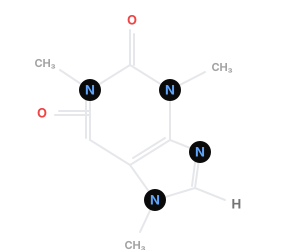
C₈H₁₀N₄O₂
194.19 g/mol
1,3,7-Trimethyl-3,7-dihydro-1H-purine-2,6-dione
58-08-2
Overview
Caffeine (1,3,7-trimethylxanthine) is a naturally occurring purine alkaloid found in over 60 plant species. As a central nervous system stimulant, it is the most widely consumed psychoactive compound globally, with an estimated 80% of the world's population consuming it daily. Caffeine's primary mechanism involves blocking adenosine receptors in the brain, which prevents the sleep-promoting effects of adenosine and promotes wakefulness. Beyond its well-known stimulant properties, caffeine has been extensively studied for its effects on cognitive performance, physical endurance, mood, and potential neuroprotective properties. It has a long history of safe use at moderate doses and is recognized as Generally Recognized as Safe (GRAS) by the FDA.
Mechanism of Action
Caffeine primarily acts as a non-selective competitive antagonist at adenosine A1 and A2A receptors in the central nervous system. By blocking adenosine — a neuromodulator that accumulates during wakefulness and promotes sleepiness — caffeine increases neuronal firing and stimulates the release of neurotransmitters including dopamine, norepinephrine, and acetylcholine. It also inhibits phosphodiesterase enzymes (at higher concentrations), increasing intracellular cyclic AMP levels, and modulates calcium release from intracellular stores. These combined actions result in enhanced alertness, improved reaction time, and increased cognitive and physical performance.
Benefits & Evidence
Physical Performance Enhancement
Caffeine improves endurance performance by 2-4% on average and may enhance strength and power output. It reduces perceived exertion during exercise and increases fat oxidation.
Mood Elevation
Moderate caffeine consumption is associated with improved mood, reduced feelings of fatigue, and a modest decrease in depression risk in epidemiological studies.
Potential Neuroprotective Effects
Epidemiological evidence suggests regular caffeine consumption may be associated with reduced risk of neurodegenerative diseases including Parkinson's and Alzheimer's, potentially through adenosine A2A receptor modulation.
Dosage & Timing
100-200mg
1-3x daily
Morning or 30 minutes before cognitive/physical tasks
50mg — 400mg
Note: The FDA considers 400mg/day safe for most adults. Sensitivity varies widely. Avoid within 6 hours of bedtime due to sleep disruption. Tolerance develops with regular use.
Safety Profile
Side Effects
- Insomnia and sleep disruption
- Anxiety and jitteriness at higher doses
- Increased heart rate (tachycardia)
- Digestive upset and acid reflux
- Headache (especially during withdrawal)
- Tolerance and physical dependence with regular use
Interactions
- Adenosine (reduces effectiveness of adenosine in cardiac stress tests)
- MAO inhibitors (may potentiate stimulant effects)
- Ephedrine and other stimulants (additive cardiovascular effects)
- Certain antibiotics like ciprofloxacin (slows caffeine metabolism)
- Lithium (caffeine may reduce lithium blood levels)
Contraindications
- Severe anxiety disorders
- Uncontrolled cardiac arrhythmias
- Pregnancy (limit to <200mg/day per most guidelines)
- Certain sleep disorders
- Children under 12 (recommended to limit intake)
References & Sources
Is caffeine a cognitive enhancer?
Nehlig A
Journal of Alzheimer's Disease (2010)
Comprehensive review confirming caffeine enhances alertness, attention, and reaction time, particularly under conditions of fatigue.
DOI: 10.3233/JAD-2010-091315 ↗Actions of caffeine in the brain with special reference to factors that contribute to its widespread use
Fredholm BB, Bättig K, Holmén J, Nehlig A, Zvartau EE
Pharmacological Reviews (1999)
Landmark review of caffeine's mechanisms and behavioral effects, establishing adenosine antagonism as the primary action at dietary doses.
DOI: 10.1124/pr.51.1.83 ↗A review of caffeine's effects on cognitive, physical and occupational performance
McLellan TM, Caldwell JA, Lieberman HR
Neuroscience & Biobehavioral Reviews (2016)
Comprehensive review concluding caffeine at 3-6 mg/kg improves cognitive and physical performance across diverse contexts.
DOI: 10.1016/j.neubiorev.2016.09.001 ↗The impact of caffeine on mood, cognitive function, performance and hydration: a review of benefits and risks
Ruxton CHS
Nutrition Bulletin (2008)
Review finding moderate caffeine intake associated with improved mood and reduced risk of depression.
DOI: 10.1111/j.1467-3010.2008.00700.x ↗Caffeine and adenosine
Ribeiro JA, Sebastião AM
Journal of Alzheimer's Disease (2010)
Evidence review suggesting habitual caffeine consumption may reduce risk of Alzheimer's and Parkinson's diseases via adenosine receptor modulation.
DOI: 10.3233/JAD-2010-1379 ↗